
Section 6 is entitled : “WHERE DID/DOES ALL THAT NEGATIVITY COME FROM, RESOLVING SOURCES OF OUR NEGATIVITY, AND SPECIAL TOOLS TO AMEND MATTERS.”
Section 6.5 entitled, “You need to Speak Up For Yourself Assertively but Not Aggressively”, is one sub-section I want to bring up here, considering it’s Importance + in Taking Care of Ourselves. Of course, the other sub-sections are Very Important as well… If you go to the Amazon site ( amazon.com/RISE-SHINE-Anx… ) for my Book and do a “Look inside”, the rather descriptive Table of Contents up front will give you an idea of the extensive coverage of this Book and of the Section 6 content.
Not communicating Assertively is definitely a Source of Our negativity which can result in increased levels of stress and hence Anxiety & Depression. This section addresses how we need to Communicate with Others when conflicts occur, to be Most Effective; i.e. Assertively, and not Aggressively nor passively, when conflicts with others arise.
6.5.You need to Speak Up For Yourself, Assertively but Not -Aggressively.
“In order to properly take care of ourselves, stick up for ourselves, and Communicate matters with people, we cannot be aggressive since this puts people on the defensive, inciting unnecessary conflicts. Instead, we need to Assertively state our minds when we communicate with others. This Assertive Behavior section could righteously be placed in section 5 (Basic/Key Tools Needed to Combat A & D), since this is just about as important as the Negative to Positive conversion tools we need to learn, in our battles with A & D. The Negative to Positive conversion tools applies to our well-being dealing with ourselves within ourselves, whereas Assertive Behavior skills involves Communicating matters with others to specifically resolve issues with Anger, and as a result our A & D levels. Nonetheless, this section was placed in an order consistent with the Training sequence in Lucinda’s Program, in support of the Recovery process. In other words, timing of this section vs. other sections in the program’s Training sequence was maintained to assure the individual going through Recovery is ready for this next step in his or her progression through Recovery.
People with Anxiety and Depression typically fall in one of two categories. Either they are:
a) …too soft spoken or too light hearted to voice their opinions to protect and take care of themselves. Consequently, they are often stepped on by others and taken advantage of, resulting in low self- esteem. ……
b) …or, handle conflicts/confrontations aggressively. When one approaches others aggressively due to some issue or situation, rarely the outcome works out in their favor. If you approach someone aggressively, unless the recipient caves in, you will not get an outcome consistent with your intentions. When people are approached aggressively, they will automatically operate defensively with a non-helpful attitude. Lucinda identified an example of this……”
“A key thing regarding Assertive behavior is, in order to properly handle things Assertively, take note at how Lucinda handled the conflict in the example in b) above (not shown here). You have to learn how to use I messages when communicating matters, indicating your feelings (e.g. I felt hurt, or I felt offended about what happened …), or heartfelt needs, as opposed to using accusatory comments like, you did this, or you did that statements which usually gets you nowhere and just serves to aggravate the conflicts.”
Additional key suggestions are also provided to help us develop All Important Assertive Communication skills.
One of which is: “…. if there is an issue you have with an individual, it is only appropriate to approach them 1 on 1” and avoid dealing with matters with that individual in a group setting.
Continuing in the Book…:
“Actions:
Just like the majority of people out there, I tend to not like conflict but based on practicing being Assertive I have become pretty good at it. As part of my, often, daily pep/ self-talk I say to myself (based on what learned from Lucinda’s program): “Assertive = Consistently Positive, Confident and Strong; Go For It. Use I messages, Id (identify) solutions, calmly Id, say what I mean and mean what I say and drop it, if I don’t say something (to voice my opinion), nobody else will.”
“Meaning of:
- I messages: Indicate your feelings when communicating matters (e.g. I felt hurt, or offended by what happened), or your heartfelt needs.
- Id solutions: As identified by Lucinda: this involves, e.g. if you happen to come across a problem at work, it is suggested that you approach your lead or manager on the matter providing them the problem, plus a possible solution or possible solutions. Your lead/manager will think very highly of you based on your way of handling it.
- .. say what you mean and mean what you say and drop it: Be short and concise in what you are saying, and do not ramble on in the process which is not effective in addressing your point of view.
- if I don’t say something (to voice my opinion), nobody else will: Don’t think any further explanation here is needed.
And remember, you do not necessarily need to look good, nor feel good when approaching matters Assertively. It’s OK to be a little shaky, nervous, or anxious. Just go forth and speak your Mind from your Heart Assertively; Go For It. When you appropriately start taking care of yourself, you will then become better and better at it, and naturally calmer in the process.
One more thing: In order to be the most effective when dealing with someone Assertively, avoid the uh(s), maybe(s), and but(s) when addressing things, emanate Positive body language, and with good eye contact.
Lucinda indicated, if there is someone that you know that is really good at communicating matters Assertively, consider using that individual as a model if you are having difficulty becoming Assertive yourself.
Being Assertive toward others is important, but we also need to be Assertive with ourselves. Don’t “but(t)” yourself out of something you want to do, or should do. Avoid procrastinating on matters as well. So talk to yourselves Assertively to avoid those excuses you may be making in your lives. Otherwise, your non-actions will make you feel negative about yourself.”
6.5.1. Your Assertive Rights per Lucinda’s Attacking Anxiety and Depression program.
This information was provided by Lucinda to identify situations that warrants assertive behavior on your part with the appropriate responses.
“Wrong: When someone close to you needs a favor, it is selfish of you to put your own needs first
Right: You should take care of yourself first, and when you take care of yourself you will then feel more like giving to others.
Wrong: You should never argue your opinion. It will make others think you are pushy and argumentative. Besides, they are probably right anyway.
Right: You have every right to voice your opinion and it is just as valuable as anyone else’s. People will respect you more for having an opinion.
Wrong: You should try hard to never make a mistake.
Right: No one is perfect – mistakes are a part of Life. Accept them and go on. Try to learn from them.
Wrong: If you can’t be there for someone or you want to get out of doing something, you should always give them an explanation of why you don’t want to do it.
Right: In most cases, you don’t owe anyone an explanation for your decisions. A simple, “No, I really can’t,” is sufficient.
Wrong: You should not protest if you feel you have been treated unfairly. Others will think poorly of you.
Right: You should stand up for yourself if you think you are being taken advantage of. If you don’t, who else will?
Wrong: You should not express your anger to people who offend you. They will think you aren’t a nice person they thought you were.
Right: You have the right to express anger. These people will think twice before offending you again if you let them know you won’t stand for it.
Wrong: You should make an effort to be friendly and sociable, even when you don’t feel like it. It’s better to act than to be antisocial.
Right: Everyone isn’t friendly and sociable all the time. Sometimes you just don’t feel like socializing. That’s fine.
Wrong: You should try to keep it to yourself when you feel anxious or insecure. Others might see it as weakness.
Right: Everyone feels anxious and insecure some time. Often, it makes you feel better to share your feelings, and it makes others feel closer to you to know that you feel comfortable enough with them to show that side of you.
Wrong: You listen to the advice of authority figures and not argue. They probably know what is best.
Right: Just because someone is in a position of authority, doesn’t make them right. You should weigh all the information and learn to trust you own decisions.
Wrong: If you don’t understand something, you should just keep making an effort to understand without asking too many questions. If you admit ignorance about something, people will think you’re stupid.
Right: You have the right to question things you do not understand. That is the only way you will learn.
Wrong: If you are complimented, you should try to make light of it and ignore it. People might thing you are arrogant.
Right: You have the right to enjoy praise and approval. It should make you feel good, and not guilty. Simply say, “Thank-you”
Wrong: When it comes to family members, you should really put their needs first when it comes to holidays and special events. Otherwise, they might think you are being selfish.
Right: You have a right to choose not to be with someone at a certain time, especially, if it is going to make you feel resentful. Remember, you will enjoy it more when you are going out of choice, instead out of guilt. Also, you do not owe them a lengthy explanation of why you have made your decisions. – just say, Sorry, but I just can’t make it.
Wrong: You should make a sincere effort to be liked by everyone.
Right: No matter how hard you try, everyone is not going to like you. You shouldn’t have to work that hard at being liked or making friends. It should be a natural process.
Wrong: If someone is complaining and being negative around you, you should listen and be compassionate. Let them cry on your shoulder.
Right: If they are not doing anything to change their situation, you have the right to tell them you don’t want to hear it anymore. Misery loves company, and if they can bring you down – they will. Don’t let them.”
Something to keep in mind about Assertive behavior: When considering communicating matters with someone Assertively, think if it is really worth your while in even doing it. Would there be any resultant negativity from your perspective if you just let it go? If not, then just let it go. Sometimes, even let the other person win. It’s Okay as long as there is no heartache on your part, and that individual would probably feel good and maybe flabbergasted if it does go that way; they may be thinking –huh?? It’s a Good feeling to let other people feel good in different ways.
If you are wrong, admit to it. So what if you make a mistake. Big Deal! Who doesn’t make mistakes? And nothing uglier than not admitting that you are wrong when you are dead wrong. Have you ever met someone like that? Not a pleasant behavior/sight.
Refer to the main section 6, items 4) and On for the suggested Training of all of 6.5. Additionally read/review section 6.2 (Unrealistic Expectations (only)) one time early during the course of your training for this section.
- Acknowledge the correlation between Assertive Behavior (this section), and section 2 (Unrealistic Expectations).
Here is the Full Instruction Set & Training Suggestions per main section 6, items 4) and On for all Key sections such as e.g. for this one 6.5 & 6.4… Others...
4) Work those chosen/applicable sections and work them per the numerical 6.X order in this section. In the process of working these subsections in section 6, if they are prominent sources of negativity, then it is recommended to go through those sections per the standard approach, designated as “Refer to main section 6, items 4) and On for Training” in the individual 6.X sections. If the section Training identifies to review your selected material in conjunction with other 6.X sections, it is suggested to review those other sections as well accordingly, regardless if you noted them as prominent sources of your negativity
It is understood this standard extent of training (i.e. section 6, items 4) and On) may be excessive for some people depending on the significance of one’s A & D. Everyone is different, and of course, it is your prerogative to follow this or go at your own pace. But as already identified, this Book is geared to all levels of A & D including those most afflicted; the ones suffering most, obviously need more repetitive reviews and training than others. Take it from Impatient me as I ridiculously went through Lucinda’s program, the first time through, in record time. You just do not want to rush through this. Again, you are your safe haven and safe place and you are in charge. But do not rush, nor get overly bogged down with the subject subsections:
a) Read through/review this section (4) times following the initial reads (as defined in the Introduction in section 1), reading through this material every other day, consecutively, over the course of 1 week. It is advised, on the off days, in-between sessions of reading the material, to be a mental observer. Being a mental observer means:
-
- Be conscious of your inner dialogue and outward behavior with regard to this subject matter (i.e. “How am I thinking and behaving with this information in mind?”)
- Take like 10 minutes each day to write about your feelings in your personal journal. Writing is therapeutic. Journaling provides the therapeutic approach which serves in part, to slow down and capture one’s thoughts on paper. This helps relieves our minds of the constant barrage of thoughts in our Anxiety ridden minds. “Write down new insights you have. Journaling will enable you to see themes, patterns, progress and growth,” during your recovery. “Some individuals report that they have found it to be very therapeutic to write a biography, including their experience with anxiety and depression.”
- Write down your Goal for the week and work on achieving that goal.
- Speak to yourself with utmost respect and catch yourself using disrespectful tones or words and immediately replace it with respectful language and compassionate tones; if you are feeling a little down at times revisit section 2 and the first Action.
b) Work the included Actions as applicable in the respective subparagraphs.
5) During the initial phases of Recovery, it is best to cycle through the relaxation session (3) times a day, but at least do it twice a day (i.e. in the morning before starting off the day, and at night prior to going to bed). It is best to lie down when you are going through this Relaxation process for the morning, and night time sessions, but just get in a comfortable seated position for the 3rd time should be okay. Note that recommendation for (3) times a day is geared to those suffering most. If you are not a significant sufferer from A & D, I suggest you do this, at least in the mornings when you wake up as I do; this allows you to kick off the day on the right foot, in a calming and soothing manner. NOTE: When you get to the Assertive Behavior section 5 and beyond that section, then it is recommended to reduce your Relaxation media routine to the morning session as a minimum which is consistent with Lucinda’s program. However, I personally would suggest to stick to the morning and night sessions when going through the process in the Book if you can especially if you are having trouble sleeping. [ Blog post Note Only: “Intended Relaxation media” YouTube Session, Id’d in 5.3.1 in Book, now Unavailable. See Details contained in following Blog Post addressing Options: https://riseandshineanxietydepression.net/2020/08/23…. Listening to this Relaxation media as indicated here is CRUCIAL, and a Huge part of the Conditioning Process for the Individual Sufferer]
6) Each morning read at first and then recite from memory (eventually you will get there), the Daily goals identified in section 16.
7) Don’t forget to start implementing the daily Relaxation self-talk per section 3.2, Action 3), when you wake up and as needed. Note that steps 5), 6), and 7) comprises the means to calibrate yourself properly setting the Positive tone for the day ahead; keep doing this on a regular basis.
8) Exercise daily striving for 25-40 minutes of aerobic exercises a day. In process include a routine to keep the heart rate up 15-20 minutes continuously. Please refer to section 4 for details.
9) Eat healthy and Drink plenty of water (ref: section 3)
10) Minimize those Stimulants and Alcohol consumption; don’t think I need to tell you what to do about Drug use (ref: section 2)
11) I think you are past the point and time for baby stepping through the steps, 8) – 10). Start doing these steps the best you can. Remember, recovery is all up to you!
———————————————
Please understand, this section 6.5, is part of the Overall Positivity Tools/Skills Process, which again is a step by step sequential build-up process allowing Sufferers to reach the point/time when they are appropriately prepared, and Ready for the Assertive Communication section including practicing in Real Life situations.
Again, I assure you, if you are a Sufferer, it takes a Process to Properly Take Care of Ourselves in Life (that broken record again :), and to condition and prepare ourselves for this All Important section … No shot from the hip here my Friends as this Proven Positivity Process simply took 16 years to develop and Optimize :)… And this Process does Flat Out Work if ya Work It!
Take Care All, and try to avoid conflicts within reason, but if ya have to deal with conflicts with others, which is part of Life, this is How Best to handle that… Avoid passively shying away from , or getting over-blown & aggressive about these matters.
:),
Ron
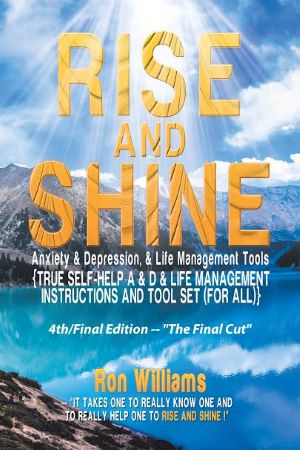

 "Rise and Shine Anxiety & Depression & Life Management Tools" & "Rise and Shine Parents Self-Help Guide for the Youngins"